The Knife and the Pen
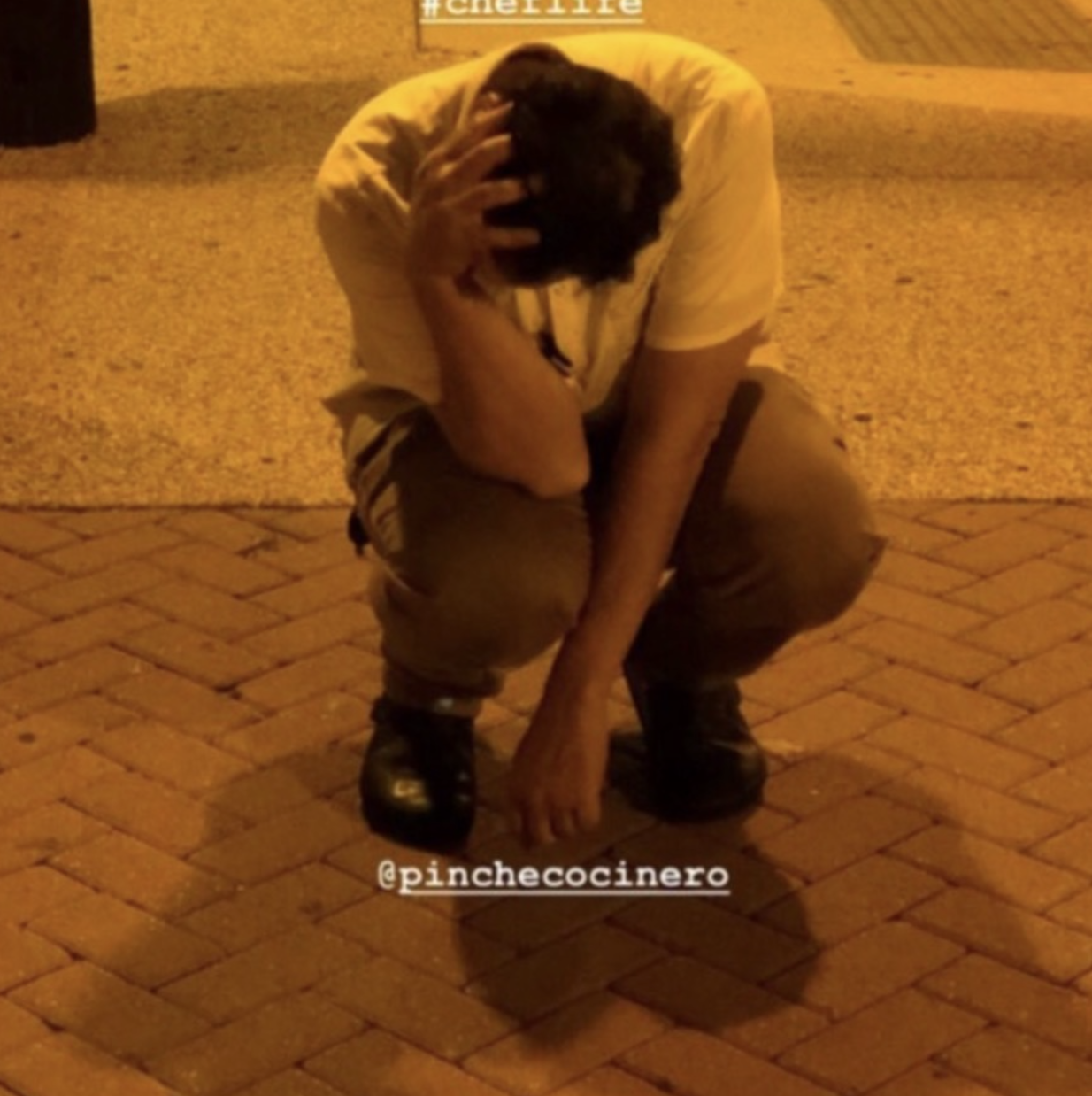
My therapist has been telling me for months that I need to write. Not as a hobby, not as a side project, not as some “chef tries journaling” bullshit, but as a form of decompression. As survival. As a way to slow my mind down long enough to understand what the hell is actually happening inside my chest. Every week she asks, “Have you written anything?” And every week I say, “Not really, work’s been insane,” which is only half true. Work is always insane, but the other half is that writing feels like a door I am afraid to walk through. It always has.
The truth is, I have always enjoyed writing. Messy, inconsistent, chaotic, but writing nonetheless. Even when I didn’t know I was creating. Even when I didn’t understand that the act of putting words down was carving out space for myself in a world that rarely made sense.
Recently I went looking for proof. I dug deep online, into corners of the internet I had forgotten existed. Tumblr. Myspace. Blogspot. Old forums. Abandoned accounts where younger-me spilled feelings like it was the only language I had.
And holy shit, there I was.
Post after post of raw, unfiltered thoughts from a kid who didn’t yet know how to hide the messy parts. Lines about wanting to leave El Paso, about running away, about missing Mexico. Lines about food before I even understood that food was my future. Strange metaphors, angsty rants, emotional spirals, and glimmers of the adult I would eventually grow into. It felt like opening a time capsule built from equal parts cringe and truth.
Reading those old posts was like looking into the walk-in after a brutal service. Cold, exposing, quiet, unforgiving, but everything was still there. Preserved and waiting.
It made me realize something important. Writing did not just follow me, it never left me. I left it.
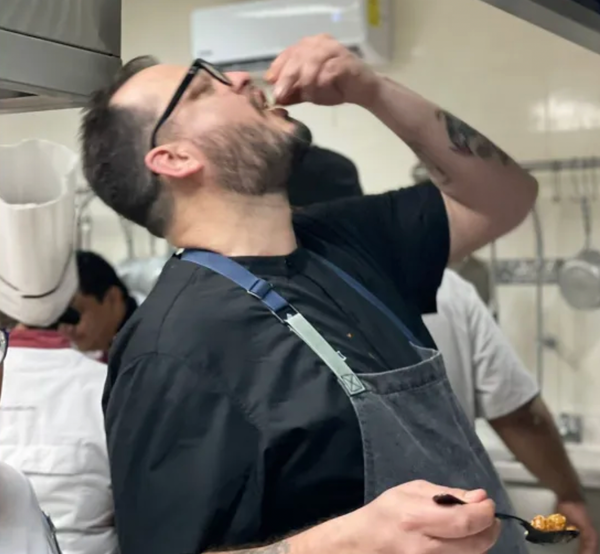
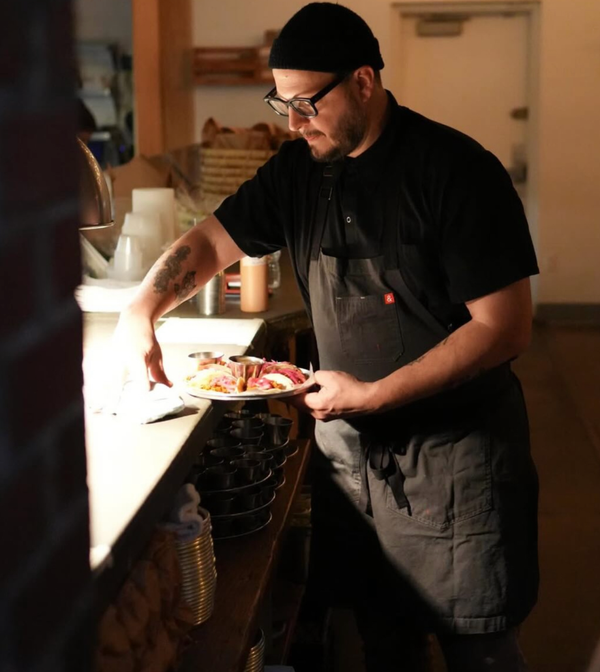
The kitchen became my life, my battlefield, my identity. The knife replaced the pen. The line replaced the page, and I convinced myself that cooking was enough of a language, enough of a release, enough of an act of expression. However, the reality is cooking and writing serve different purposes. Cooking is immediate. Writing lingers. Cooking burns through you. Writing reveals you.
There are truths I cannot plate. There are emotions I cannot season. There are memories that cannot be sautéed into something digestible. Writing is where those things go.
Being a chef teaches you to compartmentalize in ways that are both masterful and destructive. When you are responsible for a team, responsible for a restaurant, responsible for guests, responsible for the fucking cultural weight you carry as a Mexican immigrant in a whitewashed industry, you learn to tuck your feelings away like scraps on the prep table: neatly, quickly, and preferably out of sight.
Storytelling forces you to turn around and look at the pile of shit you’ve ignored. There is no mise en place for emotions.
So when my therapist asks me to write, she is asking me to stop hiding. She is asking me to give myself the same presence I give everyone else. She is asking me to put the knife down long enough to pick the pen back up.
The pen, I am learning, is its own blade. Sharper in some ways. More dangerous in others.
Writing cuts differently. It doesn’t slice through onions. It slices through denial. It cuts straight into memory. It exposes the marrow of your life. It demands honesty in a way the kitchen never does. In the kitchen, you can hide behind noise. In writing, there is nowhere to go. It is you alone on the page.
When I found those old posts online, I realized how long I have been talking to myself through writing. Every entry was a breadcrumb left behind by a younger version of me who wanted to be understood, even if he did not know who would read it. That kid was angry, lonely, heartbroken, curious, hungry as hell, and always reaching for something just beyond the horizon.
That kid is still here. He just traded keyboards for knives, and maybe he deserves both.
It makes sense, really, that writing ended up being the thing that survived, because every other creative impulse I ever had crashed and burned in that same familiar pattern of intensity, obsession, and abandonment. I taught myself guitar in high school, gripping the neck like it was the only anchor I had. But just like everything else, I learned the chords and the basics and how to make noise that sounded close enough to feeling, and then I let it drift away. The calluses softened, the strings collected dust, the songs I used to play became ghosts.
Drawing was the same. I loved the idea of creating something out of nothing, shaping lines into worlds, but I never stuck with it long enough to get past the ugly middle stage. Each sketch looked like I was trying to outrun myself, like the graphite was smudging faster than the thoughts behind it. Another half-finished endeavor. Another reminder that my creativity has always flickered with inconsistency.
All of it began in the same place. The emotional soundscape I grew up inside. I did not have the language for what I was feeling back then, so I borrowed it from music that felt like it understood me more than I understood myself. The world inside my headphones was always bigger than the one around me.
I remember listening to The Cure on repeat, trying to understand how someone could sound so undone and still make something beautiful out of the unraveling. Smashing Pumpkins made angst feel enormous, almost theatrical, like teenage fury was a kind of birthright. Elliott Smith taught me that some sadness lives in the quiet spaces, not in the screams but in the soft implosions you hope nobody notices. Their lyrics became an emotional compass. My first therapists. My first mirrors.
Even now, when I write, I can feel echoes of that soundtrack bleeding through. I slip into sentence structures that feel like dusk settling over a restless mind, or I find myself writing in rhythms that feel like walking alone at night with too much on my chest. I write around the ache the way they sang around it, never direct, but unmistakably there.
It is strange, or maybe predictable, how all of my creative habits started from the same core desire: a kid who did not know how to feel anything without transforming it into something else. A kid who needed refuge and did not know how to ask for it, so he found it in distortion pedals, whispered vocals, and notebooks filled with thoughts no one would ever read. Writing is simply the one thing I never fully quit. It stayed humming in the background like an unfinished song, waiting for me to come back.
There is something deeply human about writing down a recipe. It is documentation but also memory. It is survival but also legacy. Every recipe I write carries the scent of Chihuahua, the dust of El Paso, the weight of migration, the echoes of my grandmother’s kitchen, the resilience of my team, and the truths I haven’t spoken aloud. Recipes are cultural memory preserved in salt and ink.
Writing is the only place where my whole self can exist without needing to perform. The chef. The leader. The introvert. The immigrant. The kid hungry for connection. The man learning how to be softer without breaking. The person exhausted by the world but still in love with it. All of them fit on the page. All of them can speak.
That is why writing is survival for me, because it keeps me human in an industry that often demands the opposite. Because stories allow me to say the things I cannot say during service. Because documentation is how I honor the people who fed me, taught me, and shaped me. Because storytelling makes space for vulnerability in a life built on walls.
Cooking saved my life, but writing keeps me alive.
This entry marks the beginning of something bigger. The memoir and cookbook I have been circling for years. It will not just be recipes. It will be the story of how food becomes identity, how kitchens shape people, how culture survives through flavor, how trauma and survival coexist in every dish, and how writing remains the one place where I can take a breath and actually feel something without apology.
La Ofrenda
If you’ve made it this far with me, then you already know this isn’t just about writing, and it sure as hell isn’t just about food. This is about survival and memory. This is about finally telling the truth without worrying who flinches.
Here is what I want to offer you as a reader, as someone sitting across from me on the page the way others sit across from me at the pass.
1. A Seat at the Table I’m Building
This memoir-cookbook is not some polished project. It is the real shit. The stories I wasn’t ready to tell until now. The recipes that carry pieces of my childhood, my migration, my heartbreak, my failures, and the flavors that shaped me long before I even understood what a chef was supposed to be. When you read it, you won’t just be learning how I cook. You will be learning why I had to.
2. A Look Inside the Actual Process
Everything I write moving forward; these entries, these stories, these confessions, is part of the backbone of this future book. You’re witnessing it in real time. The drafts. The scars. The themes that won’t let go. You’re inside the kitchen with me, but not the one with the flames and the knives. The one where memory and identity get diced, seared, simmered, and served back as truth.
3. Recipes as Cultural Memory, Not Just Instructions
Every recipe I document is a form of remembering. My grandmother’s carnitas. The beans my family simmered in El Paso. The border flavors that got Americanized but still refuse to die. The dishes that remind me who the hell I am. In the memoir, recipes won’t be footnotes. They’ll be chapters. They’ll be stories that stand on their own, holding generations inside them. You’ll cook them, and you’ll feel the weight of where they came from.
4. A Promise of Honesty
Nothing I write will ever be sanitized. Not the ugly parts. Not the painful parts. Not the parts about leadership or love or culture or being Mexican in an industry that wasn’t built for people like us. If you stay on this journey with me, you’ll get the full truth, even when it’s uncomfortable, even when it’s messy.
5. An Invitation to Be Part of What Comes Next
If you’re reading this, you’re not just an audience member. You’re early. You’re here before the book deal, before the photoshoots, before the editors get involved. You’re witnessing the birth of something that has lived in me for decades. And I want you here for that. I want you to challenge me, push me, taste the food, read the writing, and feel the echoes in your own life.
If you want to support it, amplify it, partner with it, or sponsor it in a way that aligns with the mission: community, culture, belonging, honesty; the door is open.