Love and the Art of Feeding People

Anthony Bourdain said it best in Don’t Eat Before Reading This. If you want to understand cooks, look past the plates and into the hunger. Not the literal hunger, but the hunger that pushes you toward the unfamiliar, the urge to taste the world instead of just living in it, the craving for something bigger than the narrow walls you grew up in. Kitchen Confidential also cracked that open for me when I was young. It said out loud what I never had the words for. Food is rebellion and resistance. Food is identity. Food is the first door you walk through when you want your world to get bigger.
I did not grow up with that freedom. My mother, I love her dearly, lived in a culinary comfort zone the size of a kiddie pool. If something looked unfamiliar, or smelled a little wild, or belonged to a culture she did not understand, she rejected it immediately. I learned early that the world was full of flavors I was not going to find at home. So naturally, I chased the shit she avoided. I wanted the strange, the bold, the funky, the bitter, the things that made other kids say, “Are you actually going to eat that?” Bourdain made me feel like that instinct was not just curiosity, it was destiny.
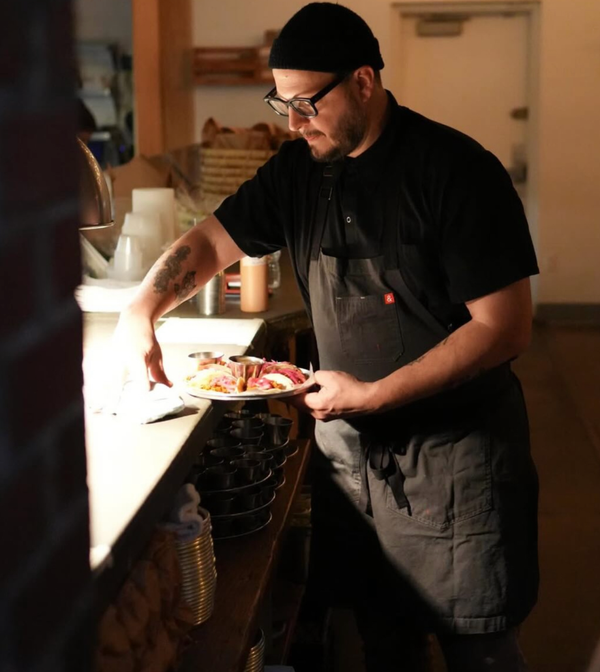
Becoming a professional chef did not soften that hunger, it only sharpened it, but here is the fucked up truth. While cooking is intimate, cooking for two hundred people a night is not. Not the way people want to romanticize it. When I am on the line, I am not feeding individuals. I am executing. I am moving plates with speed and precision. I am performing with a team in a high pressure environment that does not allow for emotional connection with every single person who walks through the door.
As an introvert, that disconnect can cut deep. I cook to nourish, but I cannot personally connect with every diner who trusts me with their hunger. I cannot hold space for two hundred people a night. My emotional bandwidth is not infinite, and this job does not care if you need a reset. There is no space for vulnerability when tickets are coming in like a live fire drill.
But every now and then a guest breaks through my walls. It usually happens in the quiet after service, or during a moment I never see coming. Someone pulls me aside and tells me a dish reminded them of home. A cook confides in me about their childhood over a simmering pot of beans. A person at the pass meets my eyes in a way that says, “What you made tonight meant something.” Those moments matter more than anyone knows. They are the fuel that keeps me going. They are the evidence that community building does not require constant connection. It requires the right connection.
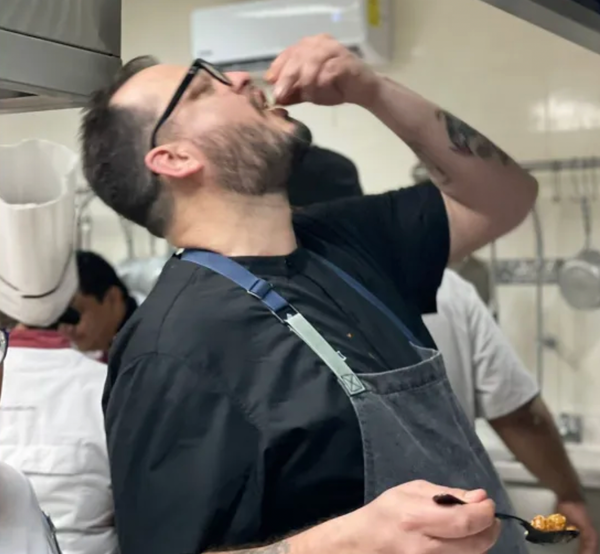
And nothing compares to watching someone take the first bite. I fucking love it. The pause. The inhale. The eyes that flutter closed. The tiny nod they give themselves because something in that bite landed exactly where it was supposed to. They nudge their companion to dig their fork in immediately as if this moment would never exist again; and it often does not. Brillat Savarin wrote, “The discovery of a new dish does more for the happiness of mankind than the discovery of a new star.” Watching that discovery happen in real time is church for me. It is intimacy in its purest form. It is the kind of romance I understand without needing to speak. Flavor becomes the language, and pleasure is the message.
This is why I keep cooking. Not for reviews or lists or critics who spend more time judging than tasting. I cook for the person who lets that first bite hit them like a truth they did not know they needed. I cook for the rare few who meet me in the vulnerability of the work. I cook because food gives me the ability to connect in a world where most social spaces feel overwhelming, too bright, too loud, too demanding. Cooking becomes the bridge between who I am and how I wish I could show up more often.
This is intimacy. This is connection. This is the art of feeding people.
La Ofrenda
Here is what love, service, and connection through food have taught me.
1. Vulnerability is part of the craft.Feeding people forces you to expose something real. Every dish is a small confession. You cannot hide behind technique. You have to let people taste and see your truth.
2. Connection is quiet, especially for an introvert.I do not need constant conversation or long emotional exchanges. I need the right moments. The small ones. The honest ones. The ones where a dish speaks for me.
3. An Intimate Recipe: Midnight Chilaquiles for Two
This is not a polished dish. This is the kind of chilaquiles you make when you are tired, soft, and honest. The kind that says, “Sit with me. Eat with me. Be real with me.”
Ingredients: Tortillas torn by hand. Salsa verde loaded with tomatillos and garlic. A fried egg with crispy edges. Queso fresco. Cilantro. Crema. Whatever cold beer or wine is closest to you. Two forks. One bowl.
Serve it hot. Serve it unpretentiously. Serve it to someone who knows how to sit beside you without needing anything more than your presence, because feeding people is not about performance. It is about intimacy and trust. It is about letting food speak when language fails. And if love lives anywhere in this industry, it lives in that first bite, right when the world goes quiet and pleasure takes over.