Life, Death and Resurrection: A Short Musing on Interpretations of Nietzsche, the Bible, and Philosophies of the Self
(End of 2025. Entering 2026.)
“God is dead.” Nietzsche stated like a diagnosis, not quite a celebration, but rather an autopsy report on a world that had outgrown its old scaffolding, but hadn’t yet built anything sturdy to replace it. Standing at the edge of 2025, staring into 2026, that line feels less like philosophy and more like lived experience.
Life, death, resurrection. Not as metaphors. As cycles. As facts. Not as metaphor, as pattern.
Life is youth, the version of yourself filled with beauty, boldness and an unstoppable fervor for life. Death arrives the moment you bind yourself to a purpose and you begin to shed childish things. Resurrection begins once you set yourself on fire and realize you must rise from the ashes, now stronger and with more acquired knowledge and skill.
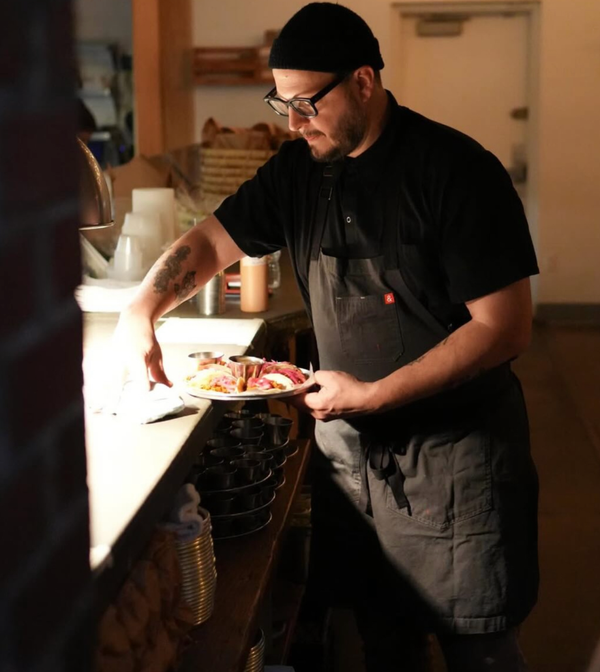
I have spent enough years around kitchens, grief, burnout, immigration, divorce, and ambition to know that nothing dies cleanly. Things rot first. They linger. They haunt you. They demand to be acknowledged before they let you go. Belief systems are no different. Identities aren’t either.
The Bible understood this long before Nietzsche ever put pen to paper. “To every thing there is a season, and a time to every purpose under the heaven” (Ecclesiastes 3:1). That passage is not about obedience. It is about impermanence. About knowing when to hold on and when to let go. It is a reminder that clinging to what has expired is not faith. It is fear.
I don’t dismiss Christianity outright, that would be lazy. For millions, it has been a comfort, a rope thrown into darkness, a framework when chaos felt unbearable. “Come unto me, all ye that labour and are heavy laden, and I will give you rest” (Matthew 11:28). There is mercy and beauty in that. There is a reason it has endured. That line has carried people through famine, war, grief, poverty, and despair. It has kept hands steady and hearts beating. To deny that would be dishonest.
Christianity, like all systems, follows a life cycle. It was once radical. Once dangerous. Once strong. Over time it calcified. Weakness became a virtue. Suffering became currency. Salvation outsourced instead of embodied. It began asking people to endure their lives instead of transforming them. It’s a belief system rooted in saving the weak and the broken and as such it requires you to be weak and broken in order to fulfill its mission. It promotes the waiting for a saviour and pushes the rhetoric that you are nothing without it. Like most successful campaigns it creates a problem and sells you the resolve.
Here’s the hard truth though: You cannot will yourself into belief. Not real belief anyways. Not the kind that saves you and gives you conviction.
Blind faith without skepticism is just obedience dressed up as holiness. If belief arrives, it must arrive honestly. Otherwise, forcing it only fractures you further from it. We learned this with mythology. Thunder was Zeus until it wasn’t. Oceans were Poseidon until we understood tides. Mayahuel gave us agave and fertility until we learned botany and fermentation. Astrology guided architecture and agriculture until science took the wheel. Understanding does not erase wonder. It refines it. We don’t need fewer questions, we need better ones.
If God exists, I do not believe God lives somewhere external, waiting to be pleased. I believe we are manifestations of that force, fractured and flawed expressions of something larger. Which through this logic, it means salvation, joy, and comfort are not granted, they are cultivated. Responsibility of oneself is the price of that freedom. Only you can bring salvation to yourself. It is on no one else.
To live without responsibility is to rot slowly. To die through belief alone is to disappear without ever arriving.
Bukowski said, “Find what you love and let it kill you.” People misunderstand that line. It’s not about self-destruction. It’s about devotion. About choosing something meaningful enough to demand your full presence, your full honesty, your full risk. Life without that is a half-life. Existing only in suffering is not noble. It’s abandonment of the self.
There is a difference between free spirits and bound spirits, and most people never name it. A free spirit moves toward curiosity, creation, and meaning that feels chosen. A bound spirit moves toward obligation, productivity, and survival disguised as virtue. One lives. The other functions. Bound spirits are praised because they are useful. Free spirits are tolerated only if they produce something worth consuming.
I mistook being bound for being disciplined. I mistook exhaustion for purpose. Kitchens reward that. Capitalism worships it. Christianity once sanctified it. You give yourself away piece by piece and call it sacrifice. You become efficient, reliable, hollow. You stop asking what you want and start asking what is required. That is crucifixion disguised as ambition.
This thought always brings to mind Kafka’s “Metamorphosis” – “When Gregor Samsa awoke one morning from uneasy dreams, he found himself transformed in his bed into a gigantic insect.” From that moment on, his value is no longer intrinsic. Kafka writes of him becoming “a burden to his family,” tolerated only in relation to what he once produced. When the work stops, the love follows it out the door.
For a long time, I was a free spirit. As my life cycle forged forward, I slowly became a bound spirit. Bound to craft. Bound to work. Bound to productivity. Bound to being useful. Kitchens reward that kind of bondage. Society applauds it. You become indispensable and invisible at the same time. You give yourself away piece by piece until one day you wake up and realize you don’t recognize the person in the mirror. You “self” is now dead.
Resurrection doesn’t look like lightning or angels. It looks like remembering who you were before you gave yourself away. To something. To someone. It is the quiet, defiant act of returning to joy, of reclaiming curiosity, touching the parts of yourself that existed before labor convinced you that worth had to be earned daily. Resurrection is not becoming someone new. It’s recovering someone old.
And praise matters. Not worship. Praise. Appreciation. Taking inventory of what you’ve survived and built without turning it into a prison. Gratitude without self-erasure. Pride without arrogance. Boundaries where there used to be only obligation.
The question I keep asking myself as 2026 approaches is this: How do I devote the same reverence to myself that I once gave to work, to systems, to expectations, to gods that demanded sacrifice but never fed me back? How do I stop crucifying myself on altars that will never love me?
What keeps me crucified? What binds me to old narratives? What identities survive only because I’m afraid of the quiet that follows their death?
This is the year I loosen those nails, that I stop mistaking suffering for meaning, that I choose responsibility without martyrdom. Life without abandonment. Death without fear. Resurrection without permission.