Becoming the Fire
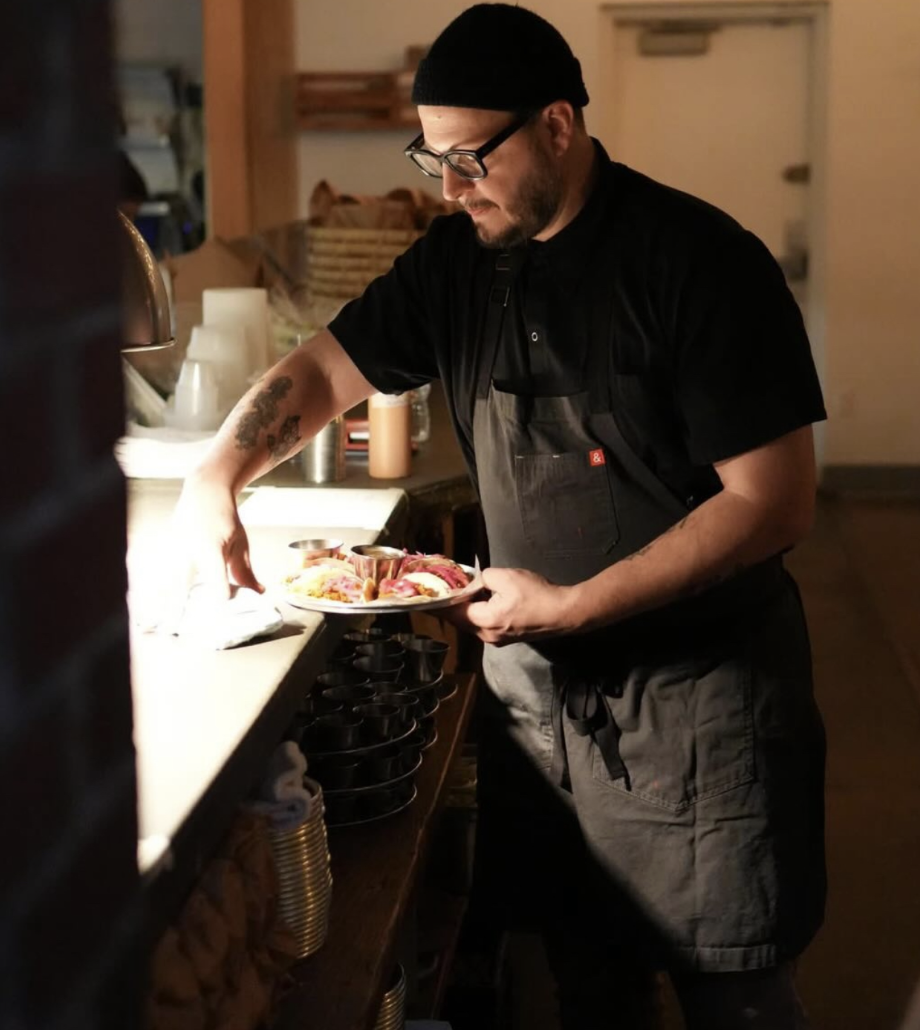
There are moments in this work when the kitchen stops being a place and becomes a mirror, a projection on the wall of yourself and everything in you. Not the flattering kind you check before service to make sure you don’t have a smear of guacamole on your chin and definitely not the kind that shows you a curated version of yourself. I mean the brutal projection, the fluorescent-lit, walk-in-door kind of mirror. The one that forces you to look straight at your own patterns, your own wounds, your own emotional choreography.
Kitchens reflect everything. The hunger, the ego, the insecurities, the resilience. The parts of you you thought you buried. They do not care what mask you are wearing or who you are pretending to be for yourself or for others. They do not care how good your intentions are. They tell the truth, loudly or quietly, but always with exacting.
Relationships do the same fucking thing. Romantic, professional, platonic, family; every person you get close to holds up their own mirror. Sometimes they reflect your softness. Sometimes they reflect your damage. Sometimes they reflect the things you do not want to see because you have spent most of your life running from them.
Nothing exposes your reflection faster than love, or the attempt at love. It’s not that I didn’t try, It’s that I didn’t yet have the tools to understand what the mirror was showing me. I was interpreting criticism as abandonment, boundaries as rejection, and intimacy as risk.
That’s the thing about mirrors. They do not distort, they magnify, especially when you don’t want them to.
This past year, in the middle of all that unraveling, I found myself coming back to something Kurt Cobain said in 1993:
“I know a lot of people who are simpletons, y’know? They’re very simple, they can enjoy their lives and be happy and secure just watching sports on t.v. and having a beer every once in a while. I’ve always felt too complicated, so I envied those people. I’m not saying that I’m smarter than those people, it’s just that I’m too sensitive. I wish sometimes that I could just enjoy the simple things in life, and just forget about everything else.”
When I read that, it felt like someone had cracked open my ribcage.
For most of my life, I envied people who could just be. People who were not tormented by nuance. People who didn’t experience every emotion like it was plugging straight into their bloodstream. People who didn’t need to dissect everything down to the bone before they could breathe again. People who could just believe in things because someone told them they should believe in them.
Eventually the noise catches up and the mirror stops being avoidable and you hit the moment where your reflection requests, nay, demands an answer.
This past year, I hit that moment hard. Rock bottom isn’t poetic, it isn’t cinematic, it isn’t some phoenix moment where you rise in slow motion. Rock bottom is silence, heaviness, the realization that nothing external and nobody is coming to save you. It is choosing whether you’re going to rebuild or stay broken. Sink or swim. A repeating question in my life since I was a child.
When I finally stopped fighting the stillness, something in me shifted. Solitude stopped feeling like punishment, quiet stopped feeling like failure and I remembered what joy actually felt like. The kind that isn’t tied to output or perfection or someone else’s expectations.
I found myself cooking again, but differently. Not cooking to impress. Not cooking to perform. Not cooking to validate my existence.
Cooking for the sake of cooking because fire and food still feel like a safe place.Cooking because transformation is a language and I needed to speak it again.
As I peeled back everything I’d been hiding behind, a hard truth surfaced: the passion I kept searching for wasn’t gone. It was buried under exhaustion, under heartbreak, under the weight of trying to be everything for everyone except myself.
When the embers faded and the ashes settled, the version of me that remained wasn’t a phoenix, it wasn’t triumphant or shiny or healed. It was raw.
Ready to stop running. Ready to stop apologizing. Ready to stop shrinking to make others comfortable. Ready to finally see myself clearly, even when the mirror hurts, and sit with it.
If I’ve become anything through all of this, it isn’t the person people expected, but then again, that is how it has always been.
La Ofrenda: Rustic Salsa de Rancho
A warm, grounding, deeply Mexican recipe meant for home kitchens, late nights, solitude, healing, or new beginnings. This is the kind of dish that reminds you that alchemy doesn’t have to be complicated. It just has to be honest.
Salsa de Rancho (Fire-Roasted Home Salsa)
Ingredients
6 Roma tomatoes3 serrano chiles, or more if you need the burn1 medium white onion, halved4 garlic cloves, unpeeled1 small handful fresh cilantro (stems + leaves)1 teaspoon coarse salt1 tablespoon apple cider vinegar1 tablespoon olive oil
Instructions
1. Char your ingredients.Place the tomatoes, serranos, onion, and garlic directly over a gas flame, on a cast iron skillet, or under a broiler. Cook until blistered, blackened, and “almost ruined.” This is what flavor looks like before it becomes flavor.
2. Peel the garlic.Once cool enough to handle, slip the garlic from its skins.
3. Blend or crush.Add all charred vegetables to a blender with cilantro, salt, and vinegar. Pulse lightly for a rustic texture, or smash by hand in a molcajete for maximum soul.
4. Finish.Stir in olive oil. Taste and adjust salt or heat. The salsa should taste alive.
5. Serve.Serve with warm tortillas, eggs, grilled meats, or by itself with a spoon.
Why this recipe?
Because this salsa is metamorphosis in edible form. Raw things turned soft. Soft things turned bold. Burnt things turned beautiful. A reminder that the fire doesn’t just destroy. It creates.